
Orthodontics and periodontal disease: how they are safely combined
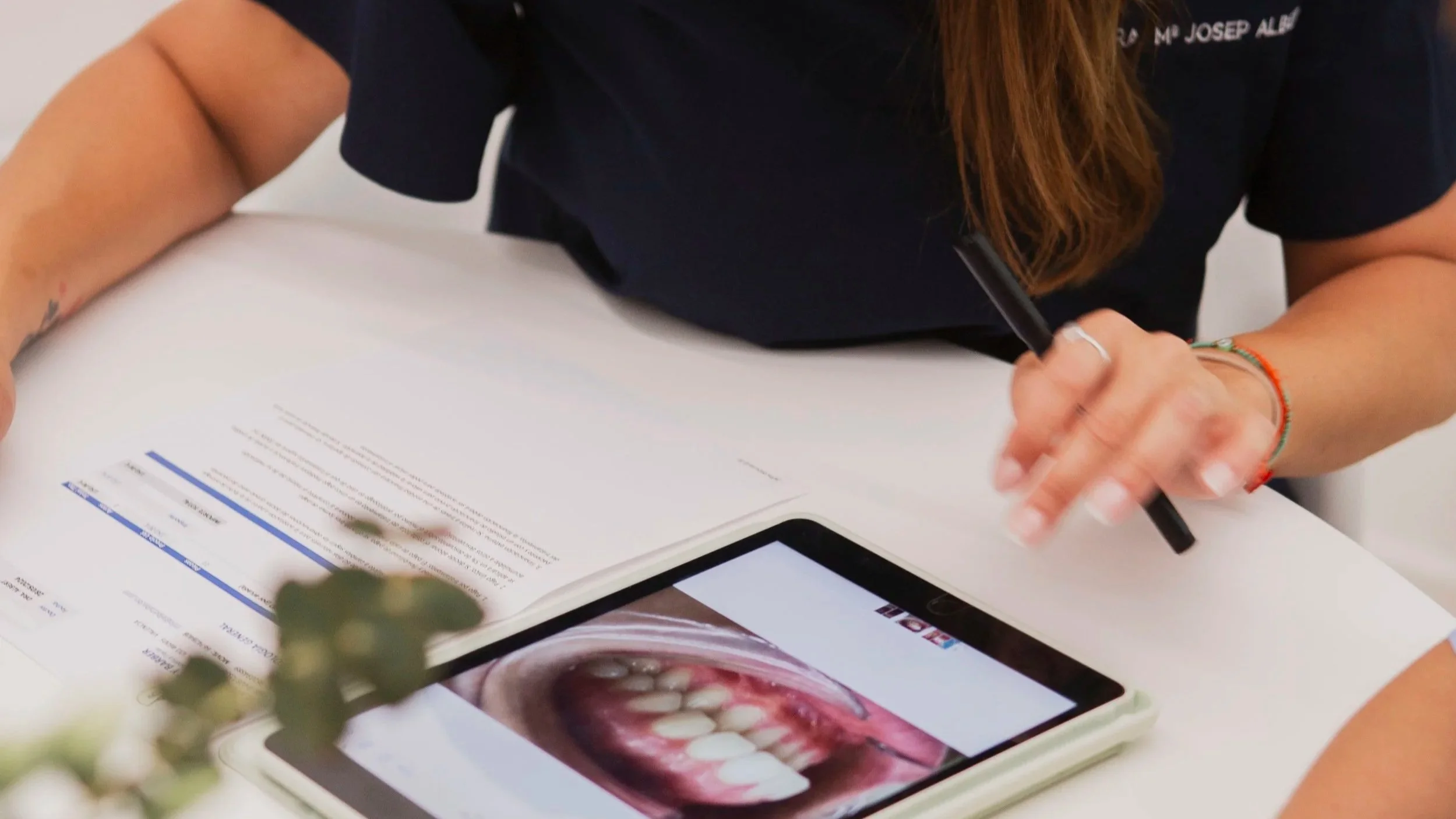
Orthodontics in patients with periodontal disease is not a standard treatment.
It requires an understanding of how the gums react, how the bone responds to tooth movement and what biological limits should not be exceeded.
When this relationship is properly managed, the result is a more stable, more esthetic mouth that is easier to maintain over the long term.
In our clinic, this planning is structured from an interdisciplinary point of view. The initial diagnosis integrates the expertise of the specialists in each area, who are responsible for deciding when it is safe to move a tooth and when periodontal health should be strengthened first.
The real challenge: moving teeth in a weakened bracket
Moving a tooth is not just about moving it.
It involves modifying the periodontal ligament, inducing bone remodeling and redistributing masticatory forces.
When the support is affected by previous periodontitis, the process requires:
Maximum clinical precision.
Constant control.
Periodic follow-up of the state of the gums.
Much gentler orthodontic forces.
Therefore, the periodontal status is the starting point. If there is inflammation, mobility or active pockets, no orthodontic movement can be initiated.
Before orthodontics: reconstructing the biological terrain
This is the most decisive phase. The gums are analyzed, bone loss is studied, dental stability is assessed and the individual risk of progression is defined.
The goal is to create a safe biological environment that allows teeth to move without compromising their support.
The process may include:
Scaling and root planing.
Complete removal of plaque and subgingival calculus.
Control of harmful habits such as smoking.
Stabilization of systemic diseases (e.g. diabetes).
Bone regeneration or gum grafts when necessary.
Once the gums respond well and the bone remains stable, orthodontics becomes a predictable option.
During orthodontics: slow movements and continuous vigilance
With the periodontium under control, the mechanical phase begins.
In these patients, it is not a matter of moving fast, but of moving with biological respect.
Treatment progresses with:
Light forces that do not overload the bone.
Revisions every 8 to 12 weeks to evaluate periodontal stability.
Periodic professional cleaning.
Orthodontic adjustments to reduce occlusal trauma.
Clear aligners are often particularly useful, as they facilitate excellent hygiene and allow tooth movement to be controlled with great precision.
Even so, brackets can be used when the case requires it, always under stricter periodontal control.
After orthodontics: the phase that defines real success
Once the orthodontic treatment is finished, the key stage to preserve the results begins.
A patient with a periodontal history needs a closer maintenance than the rest.
The ideal follow-up includes:
Periodontal checkups every 3 months.
Periodic radiographic evaluation in teeth with bone loss.
Proper use of retainers to avoid relapse.
Hygiene routines adapted to the new dental alignment.
The goal is to prevent the disease from recurring. Good hygiene and regular check-ups allow the new alignment to protect the periodontium and maintain long-term stability.
Why the combination benefits the patient
Coordination between periodontics and orthodontics offers clear advantages:
Improved access to daily hygiene.
Reduced risk of periodontal pocket formation.
Reduction of occlusal trauma on weakened teeth.
More functional and stable occlusion.
Alignment that favors a balanced bone support.
Even in advanced cases, several studies have shown that well-planned orthodontics can help preserve teeth that would otherwise be lost.
Moment in which the specialists intervene
Joint intervention is especially important at the beginning.
In this first assessment, it is determined:
If periodontal support allows orthodontics to be initiated.
Which movements are safe and which should be avoided.
What type of appliance is the most appropriate depending on the bone.
How often the patient needs maintenance.
Once this roadmap is defined, each phase moves forward in a coordinated manner and with shared criteria.
At Albert & Barber, we understand that the combination of orthodontics and periodontal treatment requires precise planning and a coordinated clinical approach. For this reason, our cases are always approached from an interdisciplinary perspective that guarantees safety and long-term stability.
Our specialist in periodontics, Dr. Maria Josep Albert, is in charge of recovering and protecting the health of the dental support, ensuring that the gums and bone are prepared for any orthodontic movement.
From that base, Dr. Carla Barber, our specialist in orthodontics, designs a treatment plan adapted to the biological state of each patient, applying controlled forces and movements respectful of the periodontium.
This joint work allows us to offer safer treatments, more stable results and smiles that not only look good, but stay healthy over time.
If you have questions about your case or want to assess whether orthodontics is right for you, contact us so we can provide you with personalized attention and an approach based on clinical evidence.
frequent questions
-
Yes, but only if careful planning is done. It is crucial to assess the condition of the gums and bone before orthodontic treatment is started. If the tooth support is weakened, measures should be taken to stabilize it first.
-
Moving a tooth in a compromised bracket can aggravate bone loss and damage the gums. Therefore, it is essential that orthodontic treatment be performed with precision, using gentle forces and under constant supervision.
-
Before orthodontics can begin, the gums and bone must be stabilized. This may involve scaling, plaque removal, control of habits such as smoking and, in some cases, bone regeneration procedures.
-
Orthodontic treatment in these patients is usually slower than in people without periodontal problems. This is because tooth movement must be more controlled and gentle so as not to overload the bone.
-
After orthodontics, more frequent follow-up is required. Periodic check-ups every 3 months, radiographic evaluations and more rigorous hygiene care are essential to maintain periodontal health and prevent relapse.
-
Coordination between the two specialties improves daily hygiene, reduces the risk of periodontal pockets and ensures a more stable occlusion. This also helps preserve teeth that might otherwise have been lost due to periodontal disease.
